A desk reference for using AI on real work
The Verification Scale
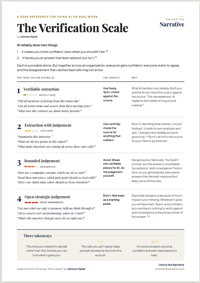
AI can't be trusted across all task types. Here's a handy scale to help you decide when to trust it, and when not to.
AI can do two things to you. The real danger is what happens when it does them to your whole team.
It makes you more confident, even when you shouldn't be. And it hands you an answer that feels tailored, but isn't. Alone, each is survivable. Together, across an organisation, everyone gets confident, everyone starts to agree, and the disagreement that catches bad calls may not arrive.
Three takeaways
1
The more you need AI to decide rather than find, the less you can trust what it gives you.
2
The calls you can't easily make yourself are exactly the ones AI is worst at.
3
You can't judge AI output by how good it sounds. AI's worst answers come back just as fluent, confident, and well-reasoned as its best.
The four levels
From the calls AI handles most reliably to the ones it gets most dangerously wrong.
Use freely. Spot-check against the source.
Use it carefully, check the source for anything that matters.
Avoid. If you must, use AI to attack your view, not form it.
Don't. Not even as a starting point.